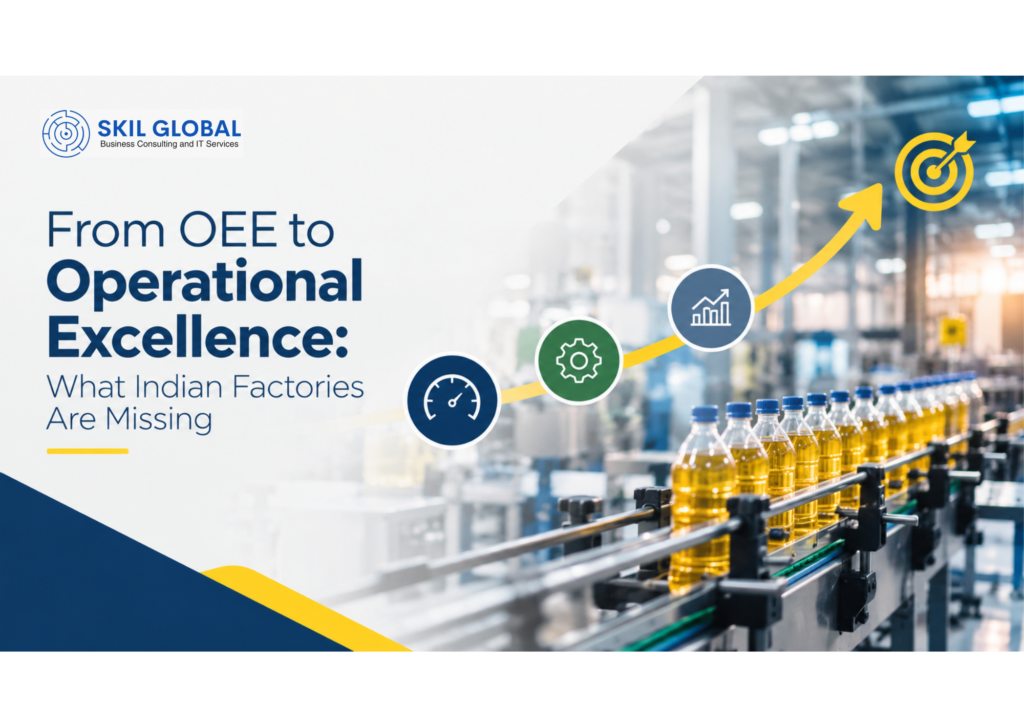
A factory can report improving Overall Equipment Effectiveness (OEE) and still struggle with missed delivery dates, rising production costs and recurring quality issues. Why? Because high OEE does not automatically mean operational excellence.
For Indian manufacturers facing pressure to improve productivity, control costs and meet customer expectations, measuring machine performance is only the beginning. The real opportunity lies in connecting equipment efficiency with the performance of the entire operation.
1. OEE Measures Equipment. Who Measures the Bigger Picture?
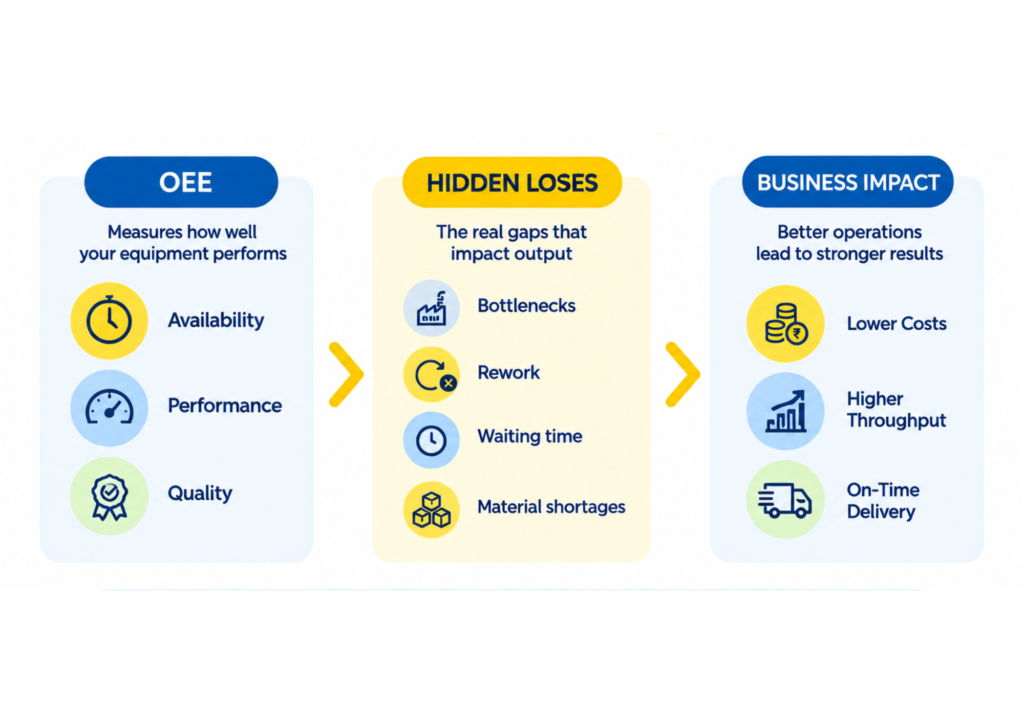
OEE combines Availability, Performance and Quality to show how effectively equipment operates. It helps identify downtime, speed losses and defects.
However, OEE alone may not reveal why production targets are missed despite good machine performance. Bottlenecks between processes, excessive work-in-progress, long changeovers, material shortages and delayed approvals can continue to affect output.
The question is no longer just, “How efficiently is the machine running?” It is, “How effectively is the entire production system delivering results?”
Discover Where Your Factory Is Losing Capacity
Download the FREE Operational Loss Diagnostic to identify hidden losses across capacity, changeovers, quality, maintenance, and planning—and uncover opportunities to improve productivity and profitability.
2. Look Beyond OEE to the Losses That Matter
To improve manufacturing performance, factories need to investigate losses across the production process.
- Downtime and changeovers: Identify recurring stoppages and long setup times.
- Quality and rework: Track defects, scrap and the cost of poor quality.
- Production flow: Find bottlenecks, waiting time and excess work-in-progress.
- Planning and delivery: Understand why actual output differs from production plans.
- Cost and productivity: Connect operational losses with labour, material and energy costs.
A loss tree can help teams break down performance gaps, identify root causes and prioritise improvement opportunities based on their operational and financial impact.
3. Turn Production Data into Operational Intelligence
Many factories already collect OEE data, but collecting numbers is not the same as using them to make better decisions.
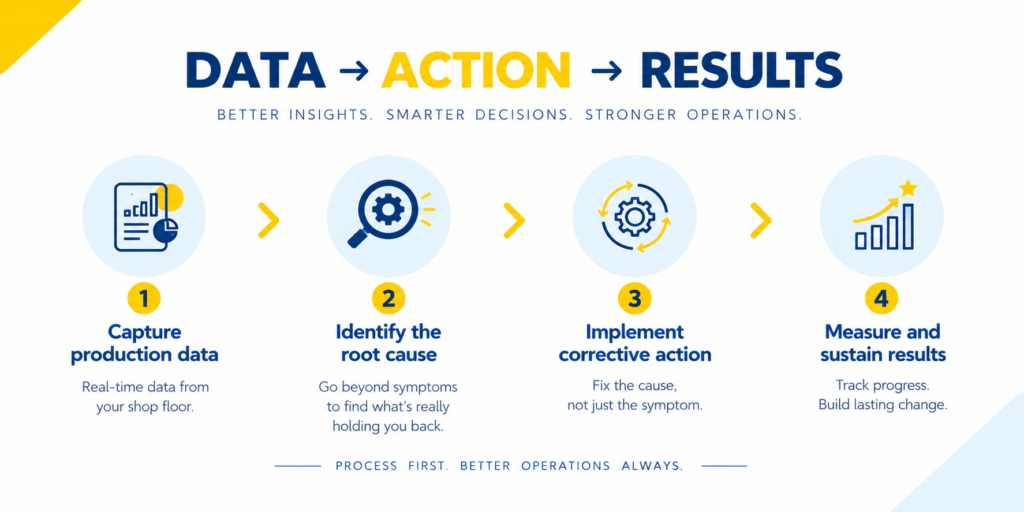
Opex connects performance data with action. Teams need reliable data, clear ownership, root-cause analysis and regular reviews that turn problems into corrective actions.
For example, a packaging line may show frequent downtime. Instead of repeatedly restarting the machine, a structured investigation might reveal that changeover practices, material availability or upstream production delays are driving the losses.
The solution then addresses the cause, not just the symptom.
4. Build a Continuous Improvement System
Sustainable manufacturing improvement requires more than dashboards and isolated projects. It needs a repeatable system.
Start by establishing a baseline. Identify the largest losses, prioritise high-impact opportunities, assign action owners and track results against defined targets. Standardise successful improvements so that gains continue across shifts, lines and plants.
Lean, Six Sigma and structured problem-solving can help manufacturers reduce waste, improve quality, increase throughput and strengthen process discipline.
From Better OEE to Better Business Performance
For Indian factories, the next step is not necessarily another performance dashboard. It is making existing operational data work harder.
At SKIL Global, we help organisations identify process losses, improve operational performance and build structured continuous improvement systems.
Is your factory measuring OEE or turning it into measurable operational gains?
Connect with SKIL Global to explore how a process-first approach can help your manufacturing operations improve productivity, reduce losses and sustain results.
Book a Call
FAQs
Operational excellence is a continuous improvement approach that helps manufacturers improve productivity, quality, delivery, safety and cost through better processes and decision-making.
No. OEE measures equipment availability, performance and quality, but does not fully capture production flow, delivery performance, inventory, cost or end-to-end process effectiveness.
Factories can analyse downtime, changeovers, defects and speed losses, identify root causes, prioritise bottlenecks and standardise improvements across shifts.
OEE is a specific equipment performance metric. Operational excellence is a broader management approach that connects equipment performance with process improvement and business results.