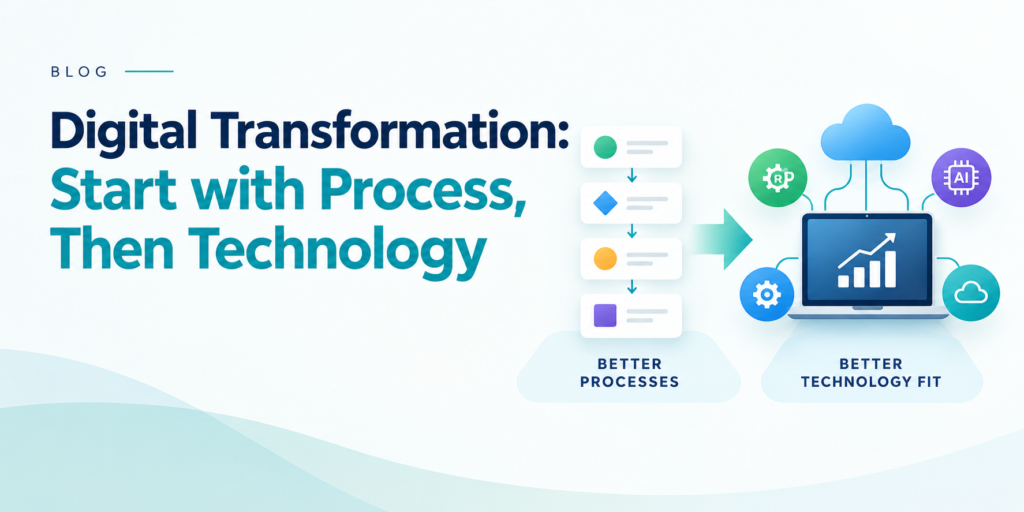
Digital transformation is often associated with new ERP systems, automation, AI, dashboards and cloud technology.
But there is a more fundamental question businesses should ask first:
Are your processes ready for transformation?
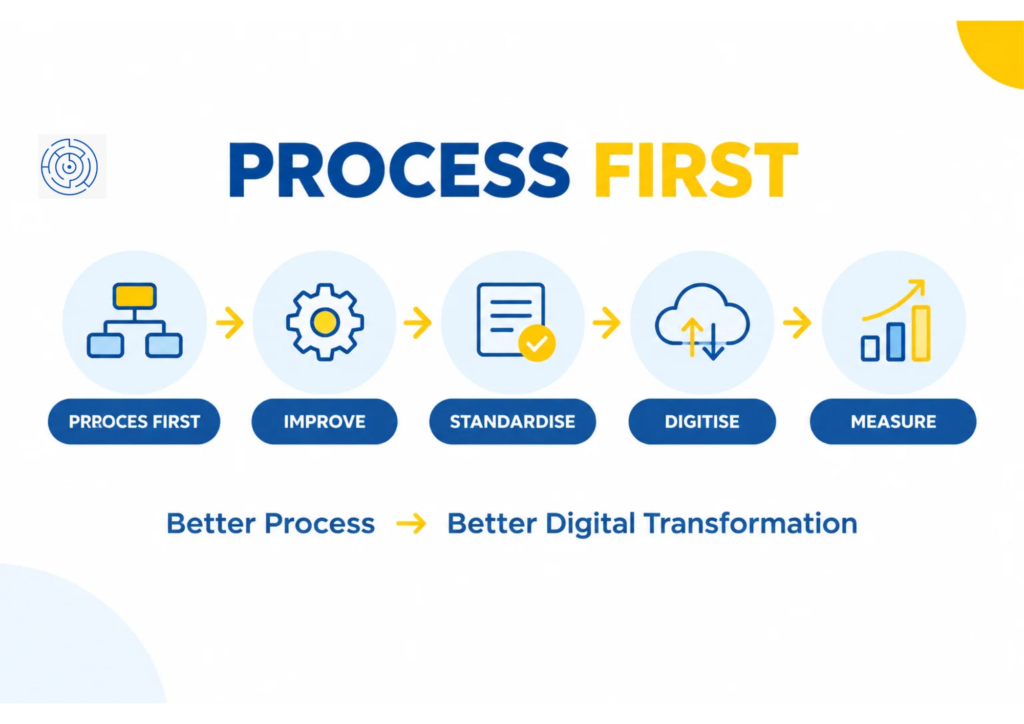
Technology can connect systems and automate work. But if the underlying workflow contains unnecessary approvals, duplicate data entry, unclear ownership or manual workarounds, digitising it may simply make the existing process faster; not necessarily better.
That is why a process-first approach to digital transformation matters. Research and industry guidance increasingly highlight the importance of understanding and redesigning processes before technology becomes the solution.
Need help custom-configuring ERPNext?
Book a tailored 1-on-1 demo with our ERPNext consultants to see how it fits your specific industry workflows.
1. Start With How Work Actually Happens
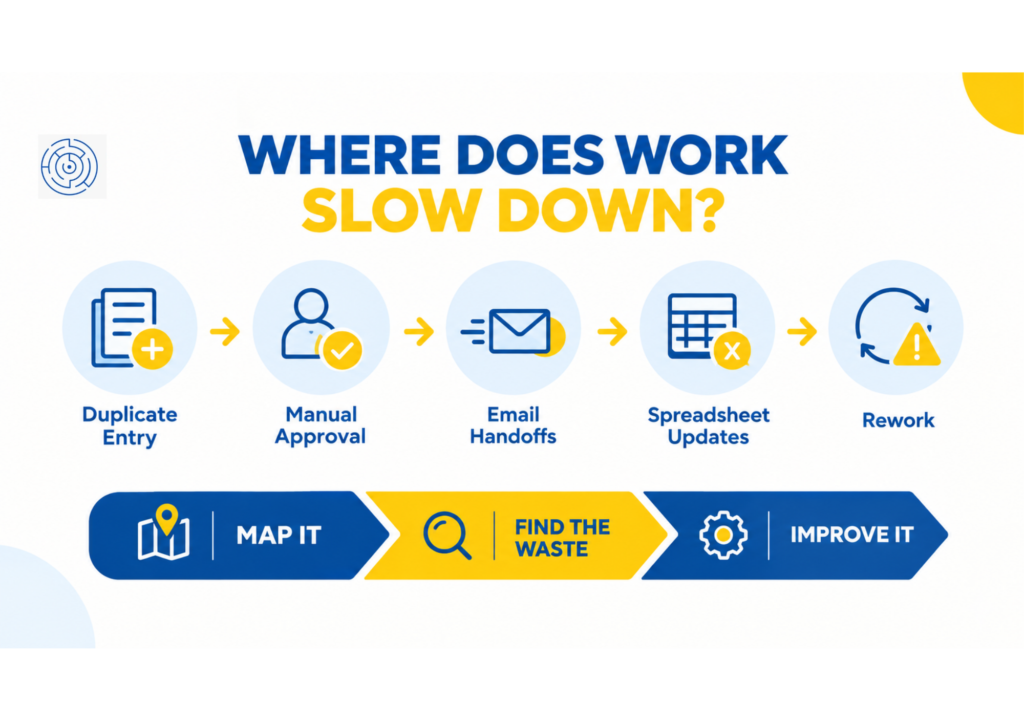
Before selecting technology, map the current process.
Look at:
- Where does work start?
- Who owns each step?
- Where are approvals delayed?
- Where is information entered more than once?
- Where do spreadsheets or emails take over?
- Where do errors and rework occur?
This creates a realistic picture of the current-state process rather than the process people assume exists.
2. Simplify Before You Automate
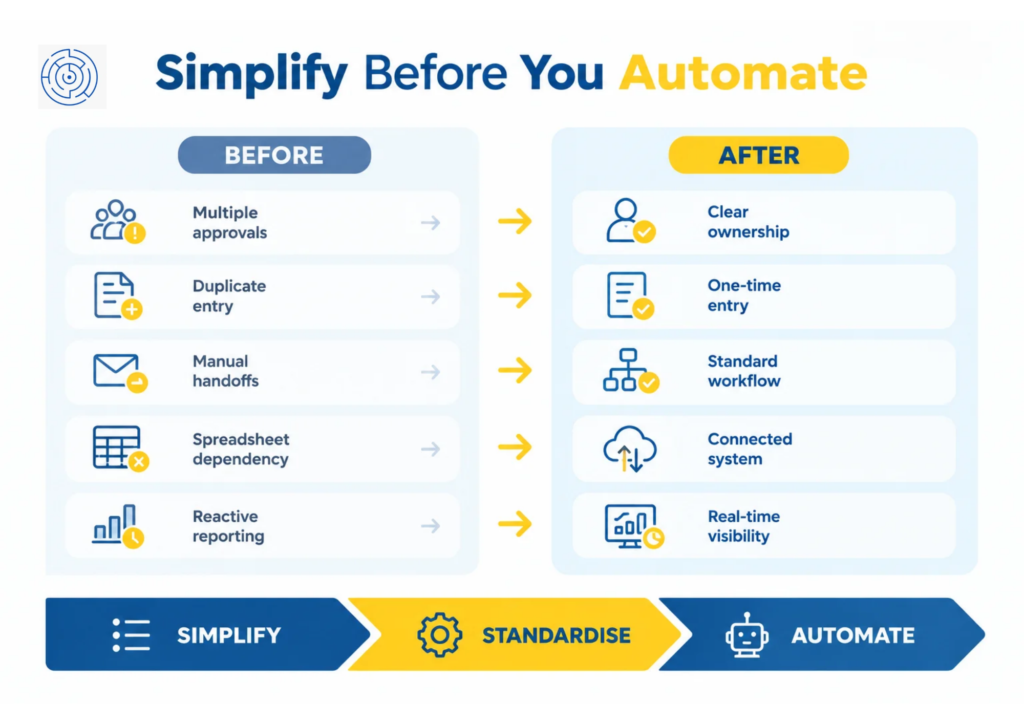
Automation should not automatically reproduce every existing step.
First ask:
Does this step add value?
Remove unnecessary approvals, duplicate checks and avoidable handoffs. Standardise the process where possible. Only then should automation be introduced.
Example: in an injectable pharma operation, removing unnecessary touchpoints cut them from 178,407 to 2,764, a 98.5% reduction, before any technology was introduced. [Read the touchpoint reduction case study →]
This is where Lean thinking and digital transformation can work together: improve the workflow first, then use technology to sustain and scale the improvement.
3. Make Technology Fit the Improved Process
Once the future-state workflow is clear, technology has a defined job. An ERP or automation platform can then help:
Standardise → Connect → Automate → Measure
For example, an improved order-to-cash process can connect sales, inventory, dispatch and finance instead of requiring teams to repeatedly transfer information between disconnected systems.
The technology becomes an enabler of the process, rather than the process itself.
4. Measure the Transformation
Digital transformation should produce measurable operational outcomes, not simply a successful software go-live.
Track metrics such as:
Cycle Time | Errors | Rework | Approval Delays | Manual Effort | Process Cost
This creates a baseline and makes it possible to determine whether the transformation is actually improving operations.
The SKIL Approach: Process First. Technology Second.
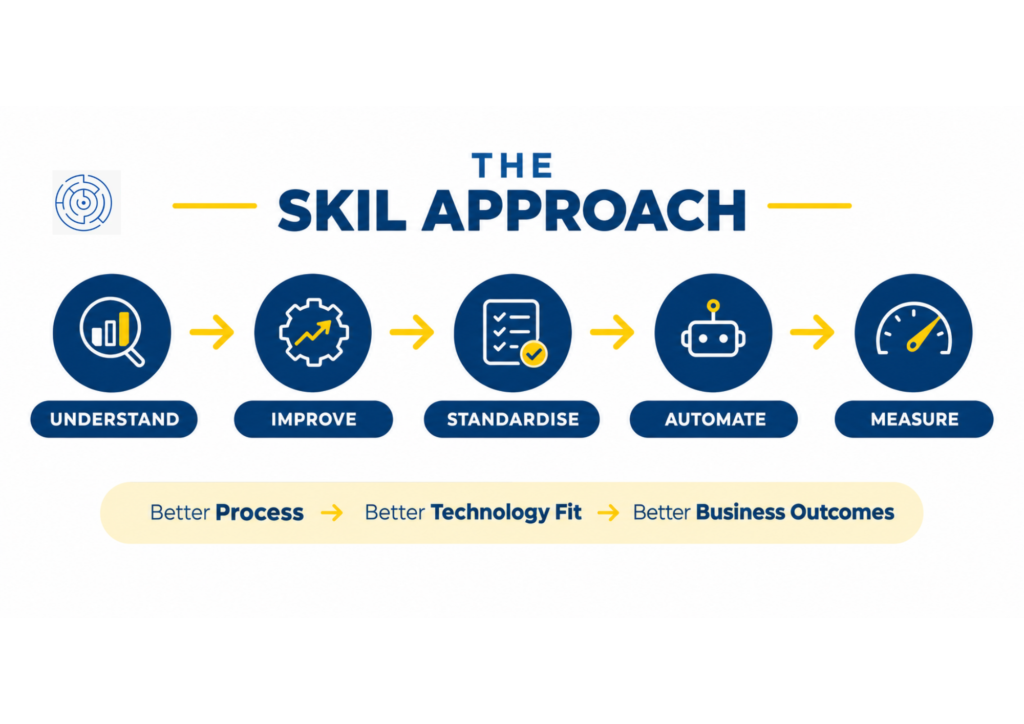
At SKIL Global, we believe transformation should begin by understanding how work happens today, identifying improvement opportunities and designing better processes before technology is configured around them.
Better Process → Better Technology Fit → Better Business Outcomes
If your organisation is considering ERP, automation or digital transformation, start by asking:
“What should the process look like before we decide what technology should do?”
Ready to turn operational complexity into connected, scalable processes? Talk to SKIL Global about your digital transformation journey.
Book a Call
FAQs
Process-first digital transformation means understanding, improving and standardising business processes before using technology to automate or digitise them.
Yes. Reviewing and simplifying workflows first can help organisations avoid automating unnecessary or inefficient activities.
An ERP can connect departments, standardise workflows, centralise data and automate repetitive activities once the desired processes have been defined.
Process optimisation focuses on improving how work is performed. Digital transformation uses technology, data and organisational change to enable broader business improvements.
Start by understanding current processes, identifying pain points, defining future-state workflows, establishing measurable KPIs and then selecting technology that supports those requirements.