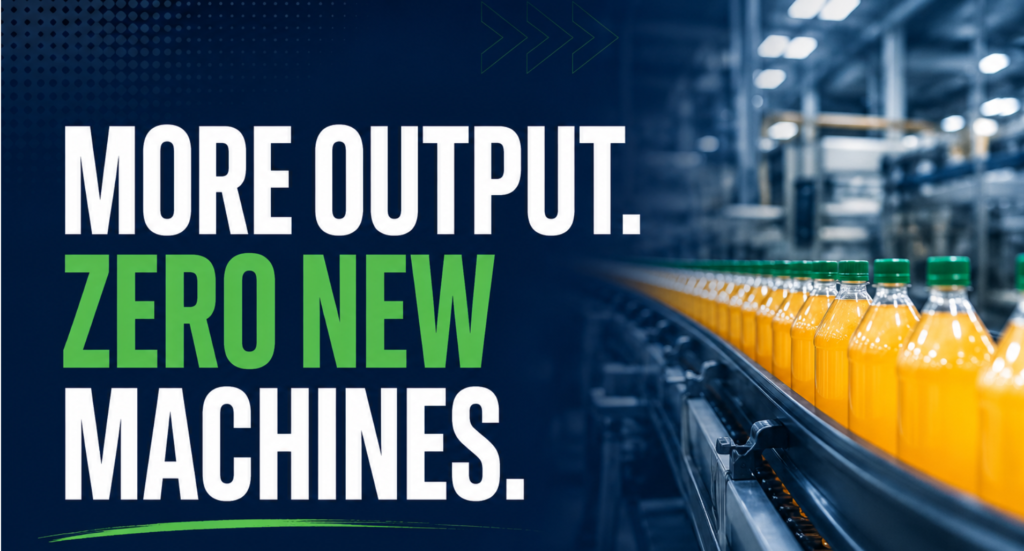
When demand increases and production targets become harder to achieve, the first question many FMCG manufacturers ask is: Do we need another machine?
Not necessarily.
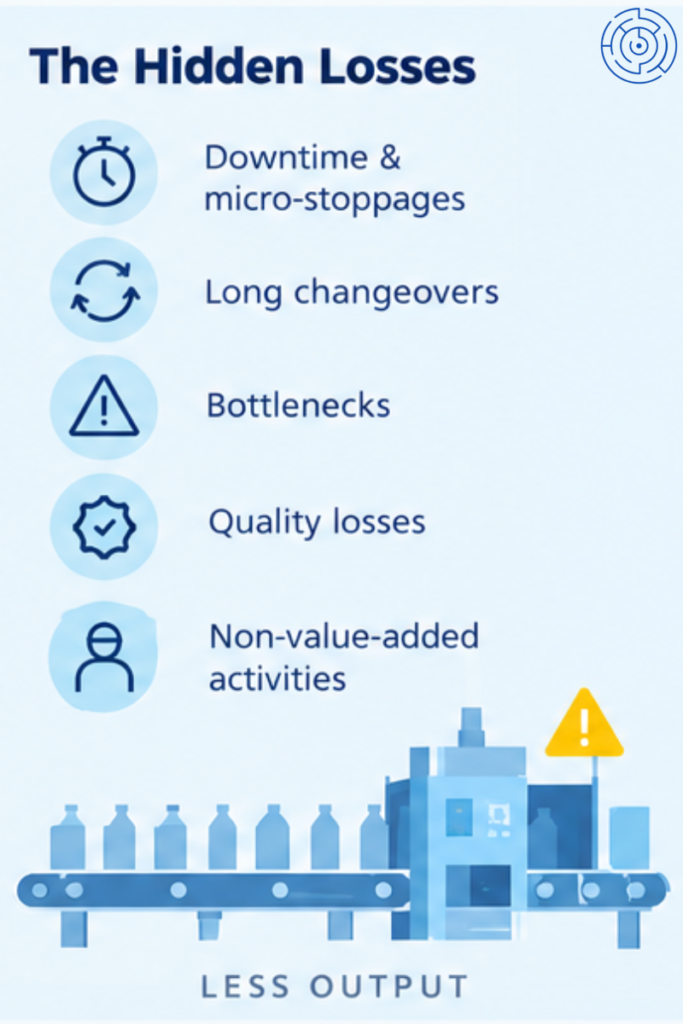
Before approving new capital expenditure, manufacturers should ask a more important question: Are we getting the maximum output from the machines we already have?
In many FMCG plants, valuable capacity is hidden inside downtime, long changeovers, micro-stoppages, bottlenecks, quality losses and inefficient workflows. This is often called the hidden factory– capacity that already exists but never appears in the final production numbers.
The opportunity is not always to work harder. It is to remove the losses preventing existing assets from performing at their potential.
Find the Real Bottleneck, Not the Loudest Problem
Every production line has a constraint. It may be a filling machine, packaging station, quality check, material supply point or even an approval process.
A common mistake is improving every area equally. If the actual bottleneck remains unchanged, overall output will barely move.
Start with bottleneck analysis. Map the end-to-end process and identify where work accumulates, where operators wait and where downstream processes are starved.
Then focus improvement efforts on increasing flow through that constraint. A few minutes recovered at the right point can create more capacity than hours of improvement elsewhere.
Reduce Changeover Time and Recover Production Hours
For high-mix FMCG operations, changeovers can quietly consume a significant portion of available production time.
The solution is not simply asking teams to change products faster. Manufacturers need to examine every activity during the changeover.
Using SMED (Single-Minute Exchange of Die) principles, teams can separate internal activities that require the line to stop from external activities that can be completed while production continues. Tool preparation, material staging, cleaning preparation and task sequencing can often be improved before the shutdown begins.
Shorter, more consistent changeovers mean more time producing and greater flexibility to manage changing demand without purchasing another line.
Attack the “Small” Stops That Add Up
A line may not experience a major breakdown, yet still miss its production target.
Why?
Micro-stoppages, minor jams, waiting for materials, sensor issues and repeated operator interventions may each last only a few minutes. Across a shift, however, these losses can become substantial.
Track them. Categorize them. Prioritize the most frequent causes.
Applying Pareto analysis, Root Cause Analysis and standardized work can help eliminate recurring losses. The objective is not to solve every problem at once, but to remove the few causes responsible for the largest amount of lost production time.
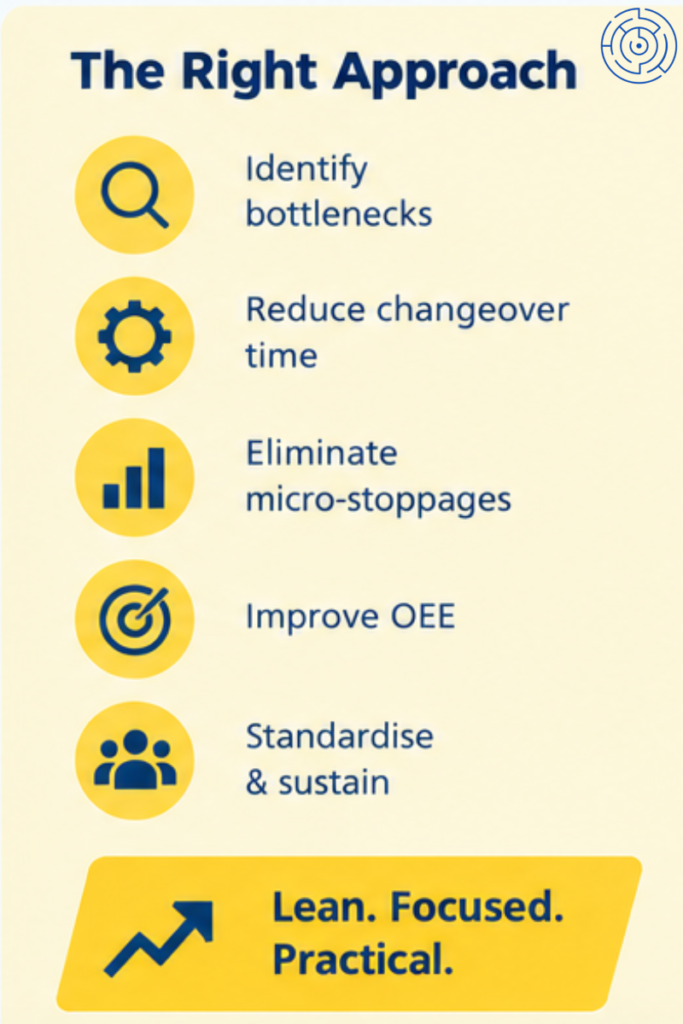
Improve OEE but Look Beyond the Number
Overall Equipment Effectiveness (OEE) remains a valuable measure because it highlights losses in availability, performance and quality.
However, the number itself is not the improvement.
A weekly OEE report cannot tell a plant manager what action to take unless the losses behind it are visible. Break OEE down by line, shift, SKU, product changeover and loss category.
This helps identify whether output is being lost because the machine is unavailable, running below speed or producing defects.
More importantly, look beyond the equipment. Excess motion, duplicate checks, unnecessary handling and inefficient material movement can also reduce the effective capacity of a production system.
Turn Hidden Capacity Into a Sustainable Advantage
Increasing output without buying new machines requires a structured approach to Lean manufacturing in FMCG.
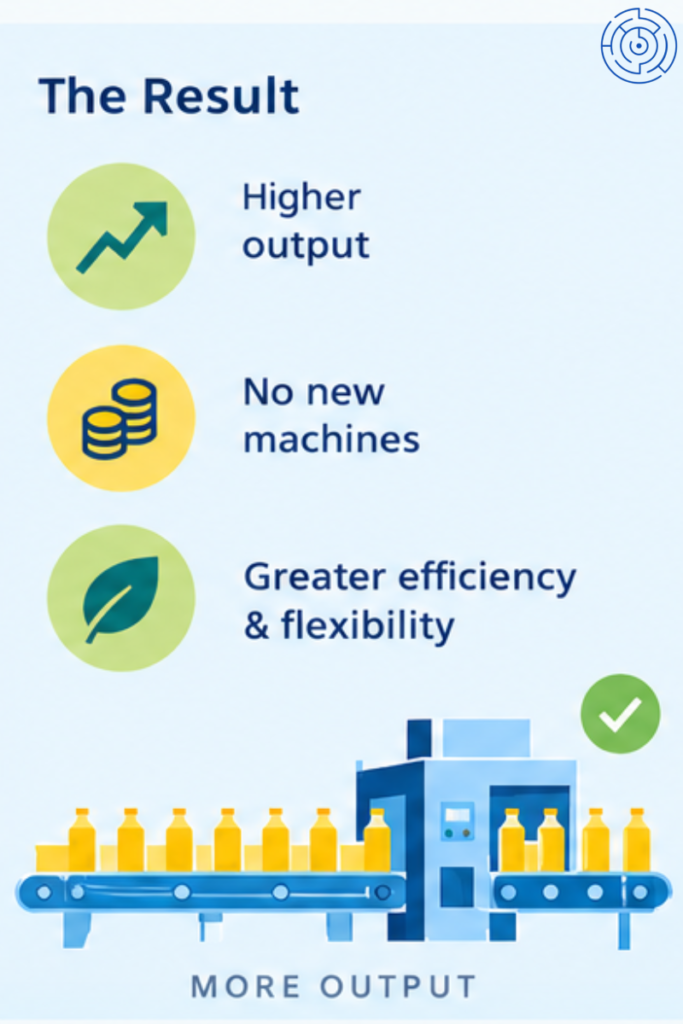
The process begins with understanding where capacity is being lost, identifying the biggest constraints and eliminating non-value-added activities. Improvements should then be standardized through clear operating procedures, visual management and regular performance reviews.
The goal is not a short-term production spike. It is a system that consistently delivers more from the assets you already own.
Before approving your next machine purchase, ask: How much hidden capacity is already sitting on your shop floor?
Skil Global helps FMCG manufacturers uncover bottlenecks, reduce operational losses and build practical Operational Excellence roadmaps. Book a 20-minute consultation with our team to explore where your next capacity breakthrough could come from, without waiting for new equipment.
Book a Call
Frequently Asked Questions
By reducing bottlenecks, changeover time, downtime, micro-stoppages, quality losses and non-value-added activities, manufacturers can recover capacity from existing assets.
Hidden capacity is the additional production potential already available within existing people, equipment and processes but lost through operational inefficiencies.
OEE is an important starting point, but manufacturers should also analyse bottlenecks, workflow delays, changeovers, material movement and other process losses.
Start with a data-driven assessment of the value stream to identify where the biggest losses and constraints are limiting throughput.