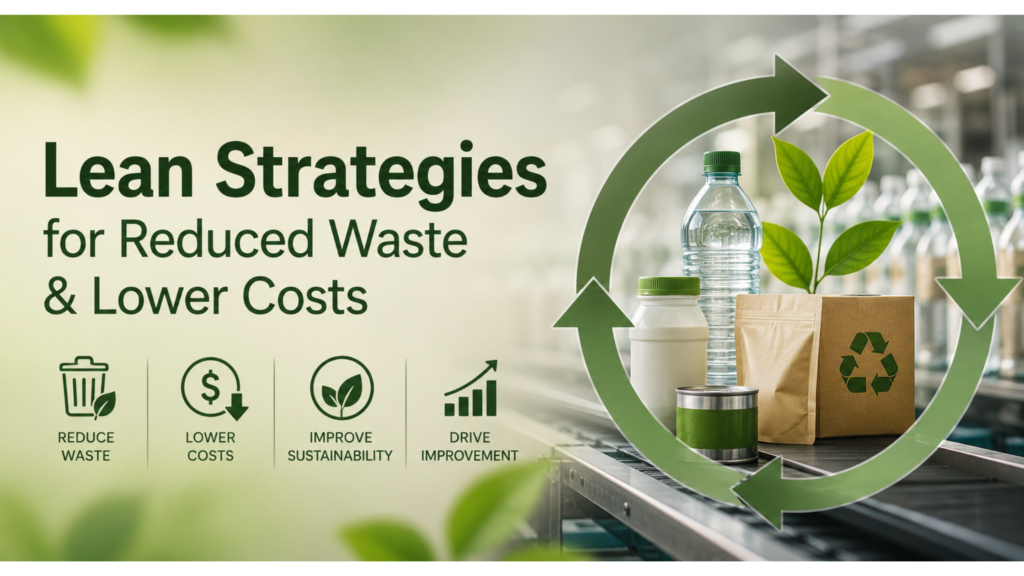
For FMCG manufacturers, sustainability is no longer just about meeting environmental goals, it’s about improving efficiency and protecting profitability. Rising raw material costs, tighter ESG regulations, and growing consumer expectations mean businesses can no longer afford waste in any form. The good news? Lean thinking helps organizations reduce waste while lowering costs and improving both operational and environmental performance
Why It Matters
Waste isn’t limited to just scrap materials. In a Lean and Green framework, waste includes overproduction, excess inventory, unnecessary transportation, inefficient processes, underutilized resources, and excessive energy or water consumption. Every form of waste increases operational costs and environmental impact.
By embedding Lean principles into daily operations, FMCG companies can improve productivity, reduce their carbon footprint, and create more resilient supply chains.
Discover Where Your Factory Is Losing Capacity
Download the FREE Operational Loss Diagnostic to identify hidden losses across capacity, changeovers, quality, maintenance, and planning—and uncover opportunities to improve productivity and profitability.
Lean Strategies That Deliver Results:
1. Standardize Processes for Resource Efficiency
Standardized work ensures every task is performed consistently, reducing errors, material waste, and unnecessary rework.
Example: An FMCG packaging line introduced standardized changeover procedures, reducing product waste and improving production efficiency. By cutting changeover time in half, the facility also significantly reduced the electricity consumed by idling conveyors and sealing equipment.
2. Eliminate Non-Value-Adding (and High-Emission) Activities
Identify activities that consume time or resources without creating customer value. Removing unnecessary movement, waiting, and excess handling improves both sustainability and productivity. Optimizing facility layouts minimizes forklift travel distance, directly reducing fuel consumption and factory floor emissions.
3. Optimize Inventory and Adopt Circular Production
Producing only what customers need helps reduce overproduction, storage costs, product expiry, and material waste.
Example: A food manufacturer improved production scheduling using demand forecasting, significantly reducing expired inventory and unnecessary stock. This approach also prevented the hidden environmental costs of processing, packaging, and ultimately sending unsold organic matter to landfills.
4. Build a Culture of Continuous Green Improvement
Sustainability isn’t a one-time initiative. Encourage employees to identify waste, suggest improvements, and challenge inefficient practices. Implementing “Green Kaizen” events empowers frontline workers to find small, consistent improvements in material usage and energy conservation that create a massive long-term impact.
Ready to Build a More Sustainable Operation?
Sustainability and profitability don’t have to compete; they can strengthen each other. By applying Lean principles, your organization can reduce waste, lower costs, and create long-term operational resilience.
Book a 30-minute Sustainment Retainer Scoping Call to explore how your FMCG operations can achieve measurable sustainability improvements through practical Operational Excellence strategies.
Book a Call
Frequently Asked Questions
Lean reduces waste across processes, lowering resource consumption, energy usage, and operational costs while improving efficiency.
Absolutely. Lean focuses on practical improvements that can be introduced gradually, regardless of company size.
Overproduction, excess inventory, packaging waste, inefficient transportation, and rework are among the most common contributors.