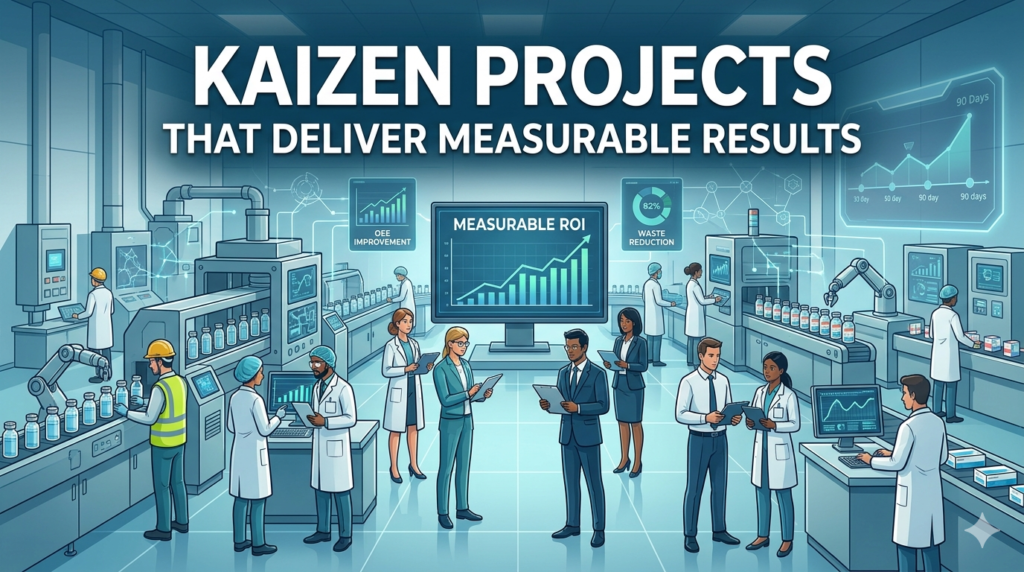
Many manufacturing organizations launch Kaizen initiatives with enthusiasm, but only a few achieve measurable and sustained business impact. In FMCG and pharmaceutical plants, improvement projects often fail because teams focus on activities instead of operational outcomes.
The result is familiar:
- Downtime continues
- Rejects reappear
- OEE remains stagnant
- Teams lose momentum
- Leadership sees little financial impact
Most plants already know where the problems exist. The challenge is converting improvement opportunities into visible shopfloor results.
Why Many Kaizen Projects Fail
In both FMCG and pharma manufacturing, improvement projects commonly struggle because execution discipline is weak.
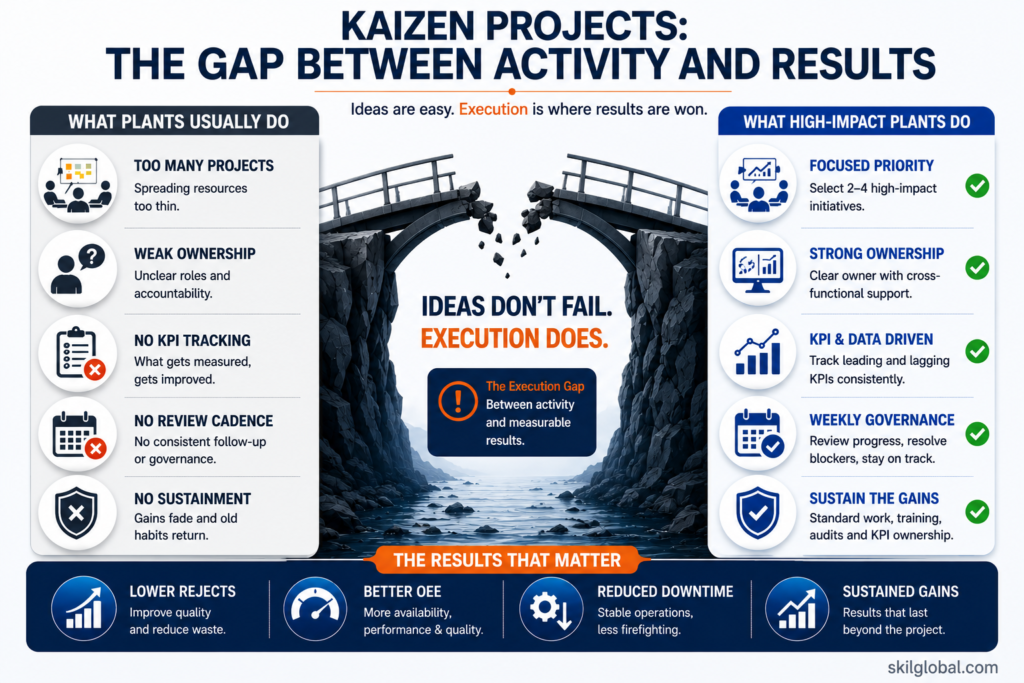
Typical operational issues include:
- Too many initiatives launched simultaneously
- No clear ownership
- Weak root cause analysis
- Poor KPI tracking
- Lack of sustainment controls
- Benefits not validated properly
For example, an FMCG packaging line may run a Kaizen event to reduce downtime, but if machine settings, standard work, and maintenance ownership are not sustained, the improvements disappear within weeks.
Similarly, pharma plants often run reject reduction projects without stabilizing process variability or updating control plans. As a result, the same quality deviations continue to return.
The issue is rarely a lack of ideas. The issue is weak execution systems.
The Root Causes Behind Weak Results
Most underperforming Kaizen projects fail because organizations focus on isolated fixes instead of operational systems.
Common root causes include:
- No measurable baseline or target
- Weak governance and review cadence
- Lack of cross-functional involvement
- Improvement remaining “CI-owned” instead of plant-owned
- No sustainment plan after implementation
Many teams also spend too much time analyzing problems and too little time executing improvements on the shop floor.
As highlighted in the 90-Day Improvement Playbook, the real challenge starts after identifying the opportunity: choosing the right initiatives, executing quickly, validating benefits, and ensuring the gains do not slip back.
What Successful Kaizen Projects Do Differently
High-impact Kaizen programs focus on a few measurable initiatives instead of spreading resources too thin.
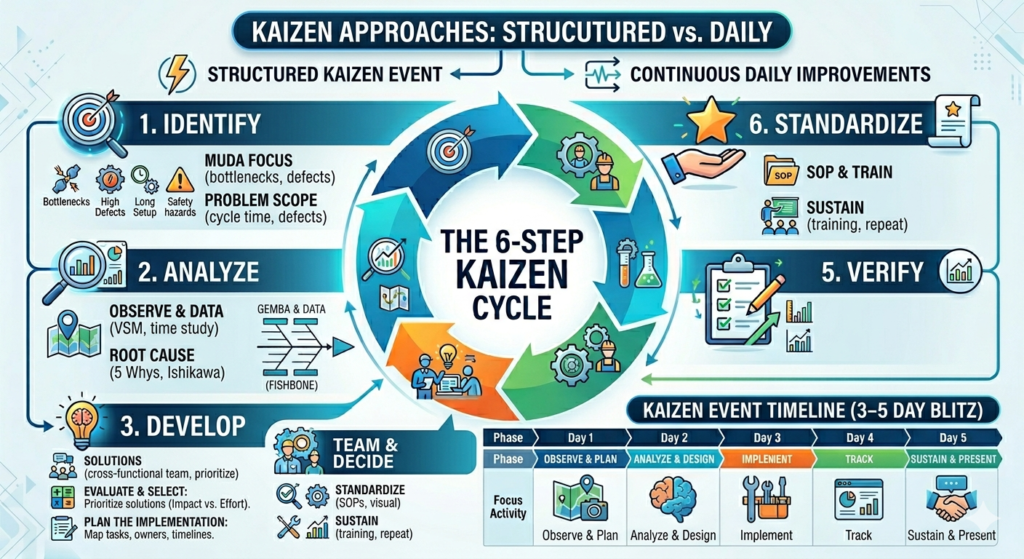
Strong projects typically target:
- Changeover reduction
- Minor stop elimination
- Reject reduction
- Downtime reduction
- Reliability improvement
The most effective plants prioritize only 2–4 initiatives that are high-impact, actionable, and measurable within 90 days.
Successful programs also establish:
- Clear project charters
- Weekly governance reviews
- KPI tracking systems
- Financial benefit validation
- Standard work updates
- Sustainment controls
This structured approach is what converts Kaizen activity into measurable operational results.
Case Study: Reducing Batch Failures in Pharma Manufacturing
A pharmaceutical manufacturing operation experienced recurring batch failures and process variability in a biosimilar manufacturing process.
The plant faced:
- High investigation effort
- Process instability
- Yield loss
- Quality deviations
A focused improvement initiative was launched with:
- Cross-functional ownership
- Root cause analysis
- Process stabilization
- Standard operating controls
- Weekly governance reviews
The result was improved process consistency, reduced batch failures, and stronger manufacturing reliability.
The success came not from isolated workshops, but from disciplined execution and sustainment.
Practical Implementation Insights
Plants looking to improve Kaizen outcomes should focus on execution discipline from the beginning.
Key actions include:
- Define measurable baselines before starting
- Limit initiatives to a manageable number
- Conduct weekly governance reviews
- Validate benefits with evidence
- Update SOPs and standard work
- Assign sustainment ownership
Without sustainment, improvement becomes temporary firefighting instead of a new operational baseline.
Download the Improvement Program Guide
If you are looking to execute Kaizen projects that deliver measurable productivity, quality, and cost improvements, explore the A2 Improvement Program framework.
The guide covers:
- Kaizen / DMAIC execution
- Governance systems
- Benefit validation
- Sustainment controls
- 90–120 day execution roadmaps
You can also explore the 90-Day Improvement Playbook here:
Book a 45-Minute Improvement Program Scoping Call
If your plant is facing:
- Stalled improvement initiatives
- Recurring downtime or rejects
- Weak sustainment
- Low OEE improvement
- Lack of measurable Kaizen results
a focused operational excellence program can help identify and execute the right improvement initiatives.
Schedule a 45-minute scoping discussion.