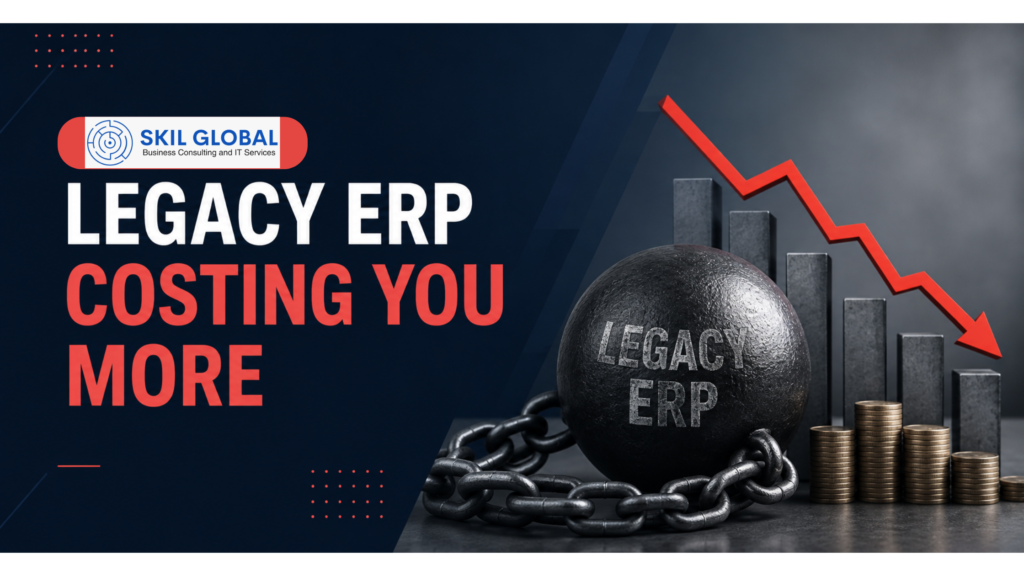
Many leadership teams view upgrading an Enterprise Resource Planning (ERP) platform as a costly, high-risk disruption. “If it isn’t broken, don’t touch it” becomes the default operational strategy.
However, legacy ERPs rarely fail catastrophically in a single day. Instead, they erode profits slowly through hidden overhead, operational friction, and lost productivity. Doing nothing carries a steep price tag.
Five warning signs indicate a legacy ERP system is silently draining operational margins, along with steps to reclaim profitability.
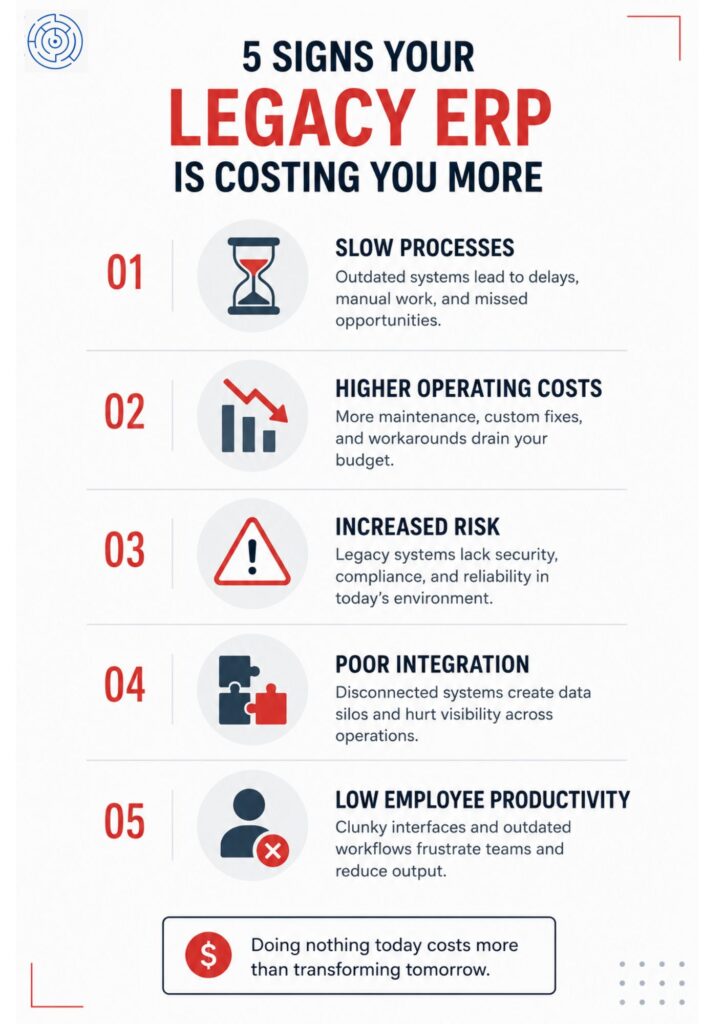
1. The “Excel Patchwork” Keeps the Plant Running
If teams continuously export ERP data into spreadsheets to run daily reports, generate production schedules, or track inventory, the core system is failing. Legacy ERPs lack flexible, real-time reporting, forcing staff into manual workarounds.
The Margin Drain: Hundreds of wasted hours on manual data entry, human error, and delayed decision-making.
Need help custom-configuring ERPNext?
Book a tailored 1-on-1 demo with our ERPNext consultants to see how it fits your specific industry workflows.
2. Maintenance & Customization Costs Keep Escalating
Outdated monolithic systems require specialized software developers or external vendor retainers for every minor change. As version upgrades fall behind, custom patches become brittle and expensive to maintain.
- The Margin Drain: Sinking capital into keeping legacy software on life support instead of investing in growth-generating technologies.
3. Inventory & Batch Traceability Are Always Out of Sync
Legacy systems struggle with real-time shop floor visibility and automated batch tracking. When stock counts are inaccurate or traceability depends on paper logs, stockouts, rush shipping fees, and scrap rates climb.
- The Margin Drain: Excess working capital trapped in buffer inventory and costly material waste.
4. Integration Friction Blocks IoT & Automation
Modern operational excellence requires seamless integration across IoT sensors, shop-floor machinery, modern Business Intelligence (BI), and automated workflows. Legacy architecture lacks open APIs, isolating operational data in silos.
- The Margin Drain: Unplanned downtime, unoptimized equipment effectiveness (OEE), and missed opportunities for predictive maintenance.
5. Decision-Makers Are Managing Through the Rearview Mirror
Legacy systems process batch data end-of-day or end-of-week. By the time leadership spots a margin variance, cost overrun, or production bottleneck, the financial damage is already done.
- The Margin Drain: Inability to adjust pricing, resource allocation, or production capacity in real time.
Turn ERP Modernization into a Growth Engine
Upgrading from a legacy system doesn’t require multi-million-dollar proprietary software. Modern, agile platforms like ERPNext combined with Lean process optimization, deliver end-to-end operational visibility at a fraction of the traditional cost.
At SKIL Global, we bridge the gap between process consulting and IT execution. We help enterprises identify operational leaks, streamline workflows, and implement scalable ERP solutions that deliver measurable ROI.
Ready to uncover how much your legacy system is really costing you?
Book a Call
Frequently Asked Questions (FAQ)
Hidden costs include excessive vendor maintenance fees, manual labor wasted on Excel workarounds, delayed reporting, higher error rates in inventory, and lost revenue due to operational bottlenecks.
Key signs include inability to integrate with modern software/IoT, high reliance on spreadsheets for basic reporting, lack of real-time inventory visibility, and rising IT support costs for custom code fixes. .
Yes. Platforms like ERPNext offer full customization, seamless API integration, real-time analytics, and comprehensive modules (Manufacturing, CRM, HR, Finance) without high licensing fees.