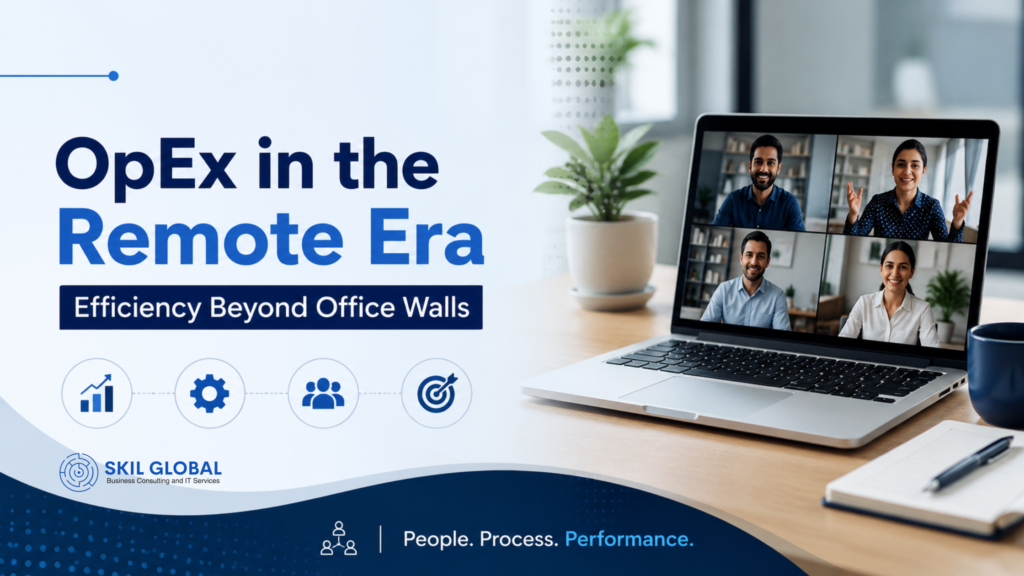
When organizations shifted to remote and hybrid work models, many assumed that cloud tools like Slack and Zoom would automatically preserve productivity. Instead, many companies inherited new operational bottlenecks: endless virtual meetings, fragmented communication, and unmeasurable workflows.
Operational Excellence sn’t just for shop floors or physical offices. In a distributed environment, OpEx is the single greatest lever for eliminating digital waste, maintaining visibility, and driving predictable performance.
Here is how forward-thinking leaders are modernizing OpEx for distributed teams.
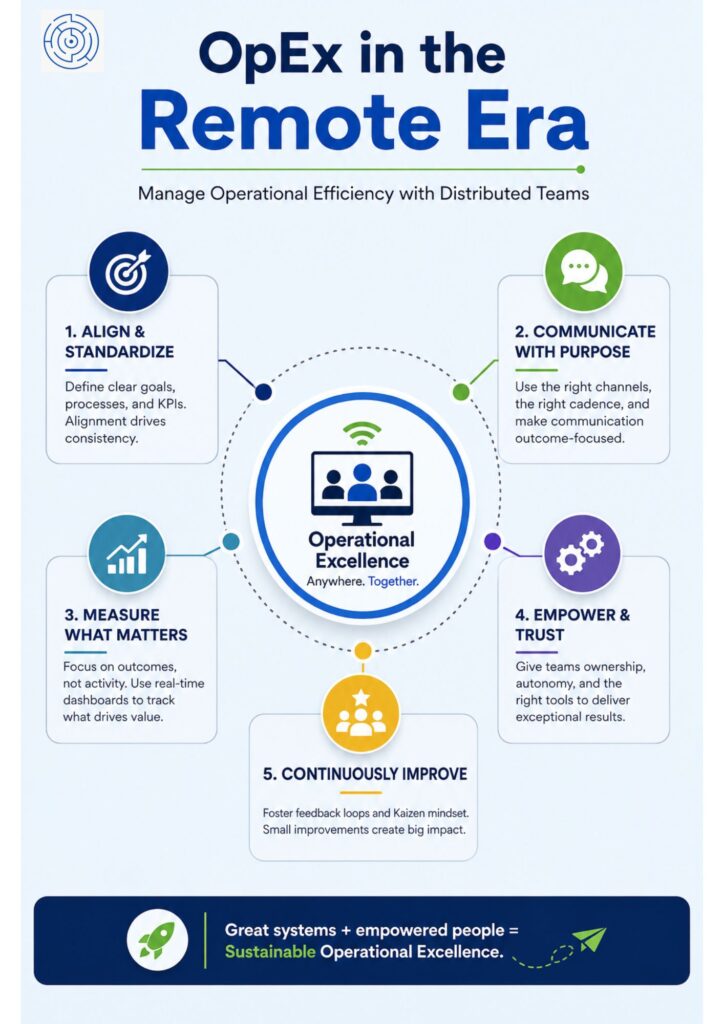
1. Shift from Activity Monitoring to Value-Stream Visibility
Managing operational efficiency remotely requires moving away from tracking hours logged or status indicators. Traditional micromanagement fails in a virtual ecosystem; instead, map your digital value stream.
Standardize Handoffs: Define “Definition of Done” for every project milestone to eliminate rework.
Identify Bottlenecks: Where do deliverables stall? Is it multi-tier approvals, missing handover specs, or context-switching between tools?
2. Reduce Digital Waste with Lean Principles
Lean Six Sigma principles apply directly to modern remote workflows. In distributed teams, waste rarely looks like physical scrap; it looks like information overload:
- Over-Communication Waste: Replace unnecessary status-update meetings with asynchronous, structured dashboards.
- Defect Waste: Eliminate vague task briefs that force team members to spend hours seeking clarification.
- Waiting Time: Streamline approval chains so employees aren’t blocked waiting across time zones.
Pro Tip: If a meeting’s sole purpose is reading an update aloud, cancel it and publish an async summary instead.
3. Empower Teams with Asynchronous Problem-Solving
In physical environments, leaders can observe operational friction on the floor. In remote settings, friction remains invisible until deadlines are missed.
Build an async continuous improvement culture by training team leads in structured root-cause analysis (such as the 5 Whys or Fishbone Analysis). When issues surface, teams should document systemic fixes directly within a shared knowledge base rather than relying on quick-fix messages.
Frequently Asked Questions (FAQs)
Track output metrics and cycle times (e.g., lead time from request to delivery, defect rates, and process throughput) rather than hours worked or active keyboard time.
Yes. Root-cause analysis, value stream mapping, and Kanban visual boards adapt seamlessly to digital toolsets and distributed teams.
Unstructured communication and a lack of standardized digital workflows are the leading causes of inefficiency across remote teams.
Ready to Elevate Your Remote Operational Excellence?
Managing a distributed workforce shouldn’t mean sacrificing margin or speed. At SKIL Global, we partner with enterprise leaders to implement custom operational excellence frameworks, train teams in Lean Six Sigma, and optimize business processes for measurable ROI.
Transform Your Operational Efficiency – Book a Consulting Strategy Session with SKIL Global Today